The study: research first, pitch later
Lead Funnel / Automation
The 2026 Efficiency Study
A research-led survey funnel that qualifies business owners on revenue, team size and AI maturity, then books them straight into a call. Hardened, automated, and scoring 98 on performance.
98
Lighthouse performance score
1.7s
Largest contentful paint
0
Layout shift on load
How we got this number
This is our own funnel, built in-house, and it costs $0 a month to run: the survey, scoring and CRM hand-off all sit on infrastructure we already pay for. It brings in about two qualified clients a quarter at a $3,000 engagement, $24,000 a year, and saves around two consultant hours a month on top. The very first client it books repays the build; every one after that is pure return.
1 client
Repays the build
About The 2026 Efficiency Study
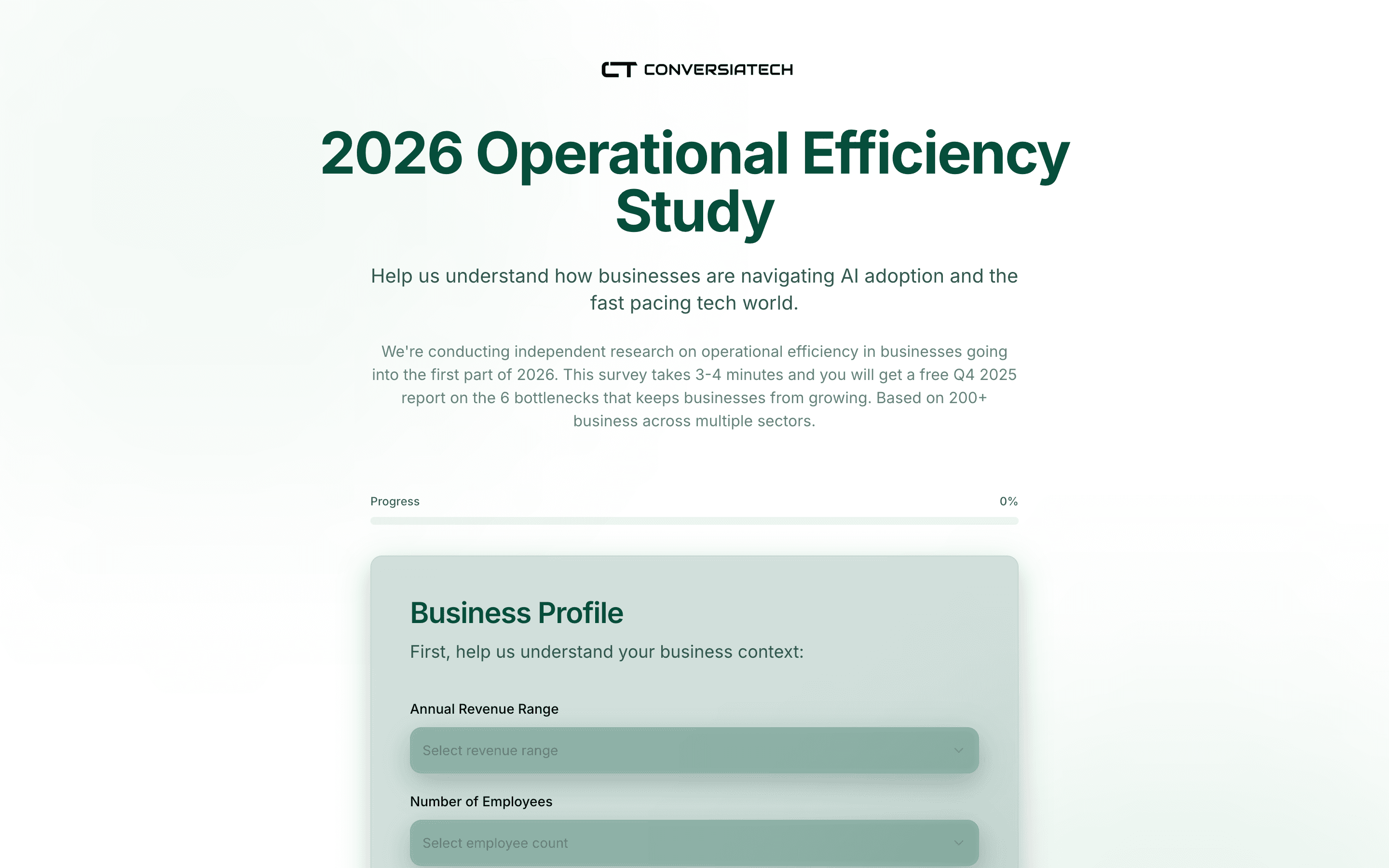
The 2026 Operational Efficiency Study is a lead funnel we built for our consulting brand Conversia Tech. Instead of a sales page, cold traffic meets a 3 to 4 minute research survey about AI adoption and operational bottlenecks, and gets a free industry report in return.
The Challenge
Cold traffic does not book audit calls from a pitch. The funnel had to earn the conversation: qualify each business on revenue, team size and AI maturity, give real value back, and keep bots and spam from polluting the pipeline, all without a single page feeling slow.
What We Built
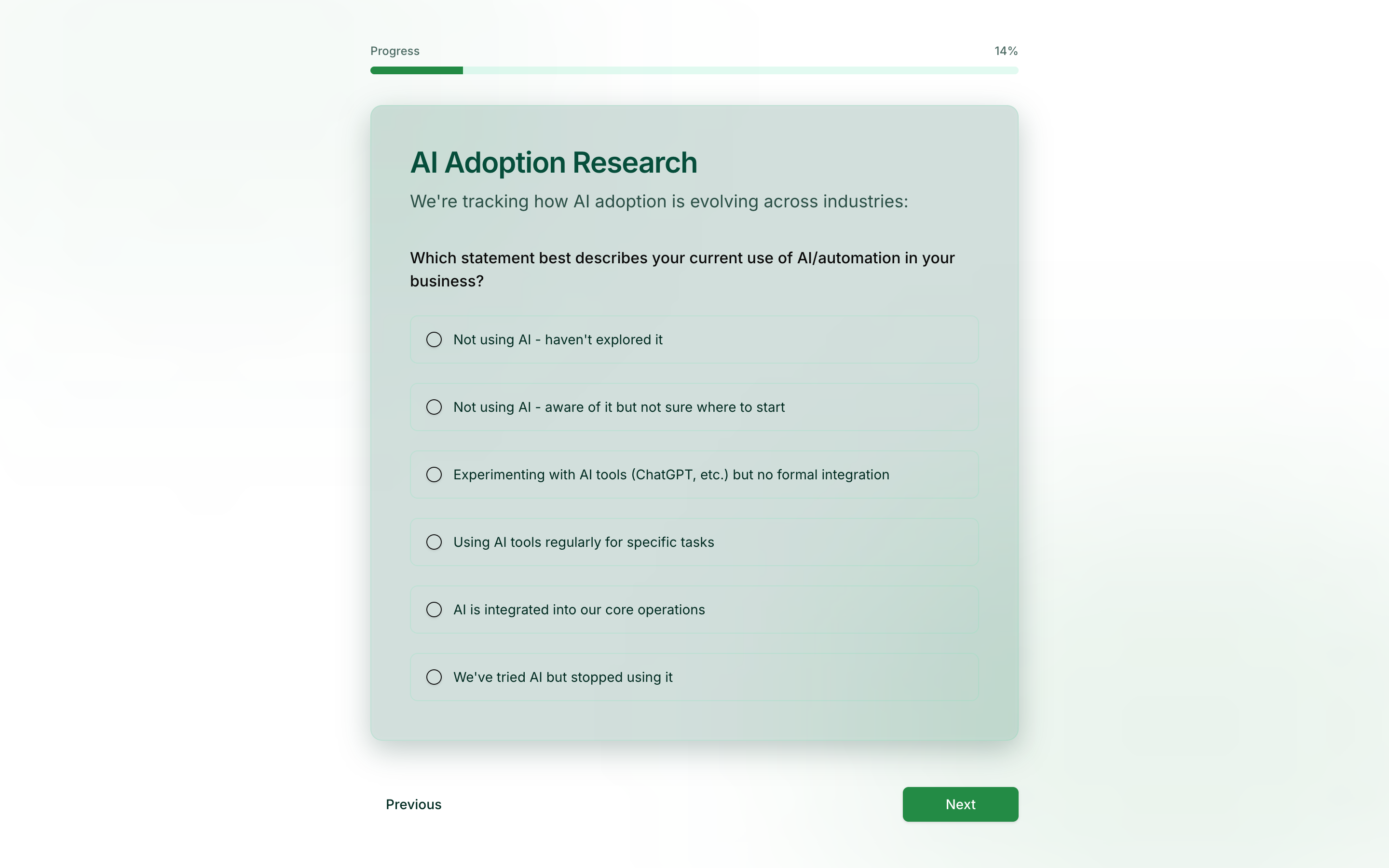
We built a multi-step survey with conditional branching, so a business that tried AI and stopped gets asked why. A rules engine maps each answer set to a personalized diagnosis before the booking ask. Submissions flow through an n8n webhook into the CRM with a fail-open strategy, so a downstream outage never loses a lead. Bots hit a honeypot and are silently discarded, and rate limiting caps abuse per IP and per email. A dedicated performance pass took Lighthouse from around 60 to 98.
The Results
- Lighthouse performance went from around 60 to 98, with largest contentful paint at 1.7 seconds and zero layout shift
- Every submission arrives qualified on revenue, team size, AI maturity and urgency before the first call
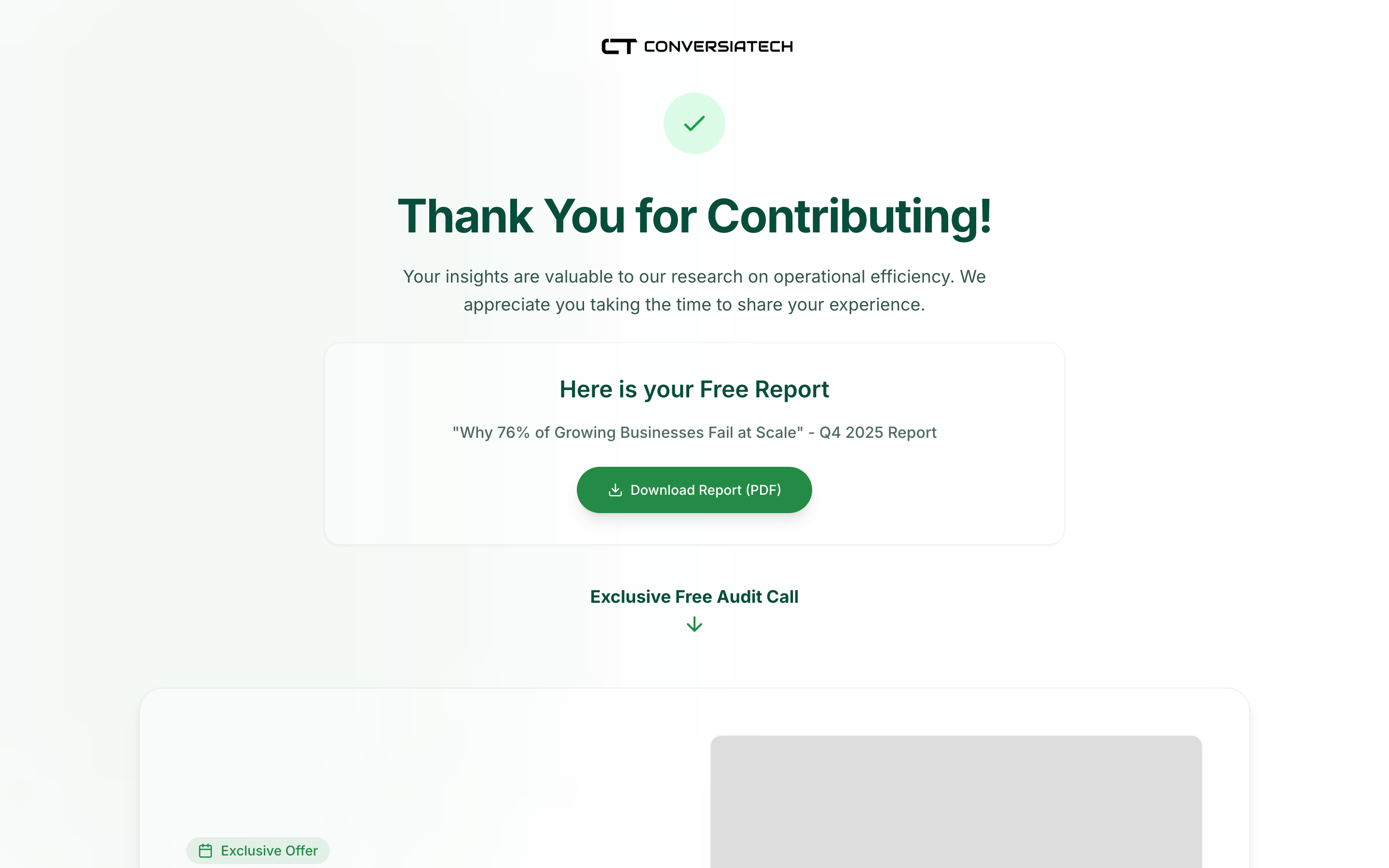
- Respondents get a personalized diagnosis and a free report, then book directly in the embedded calendar
- Bots are silently discarded by a honeypot, and rate limiting protects the pipeline
The Value, Calculated
Conservative estimates. The assumptions are part of the math.
Time it saves
~2 hrs/month
Without pre-qualification, discovery means 30 to 45 minutes on the phone finding out whether a business even fits: revenue band, team size, whether they have tried AI at all. The survey answers all of it before the call, and the honeypot plus rate limiting keep bots out of the calendar entirely. Screening the bad-fit conversations out of the calendar saves a couple of consultant hours a month, and every real call starts pre-briefed.
Money it saves
~$200/month
Those two consultant hours are worth around $200 a month at a $100 rate. The same filtering bought as an SDR screening layer would cost far more. And because submissions flow into the CRM through n8n automatically with a fail-open fallback, no lead is ever lost to a downstream outage, which is the most expensive failure a funnel can have.
Money it makes
2 clients/quarter
Every submission arrives scored on revenue, team size, AI maturity and urgency, and books straight into the calendar while intent is hot. At a $3,000 engagement, the two qualified clients a quarter it books are worth $24,000 a year from a funnel that costs nothing to run.
Return on investment
The first client pays back the build
This is our own funnel, built in-house, and it costs $0 a month to run: the survey, scoring and CRM hand-off all sit on infrastructure we already pay for. It brings in about two qualified clients a quarter at a $3,000 engagement, $24,000 a year, and saves around two consultant hours a month on top. The very first client it books repays the build; every one after that is pure return.
Want results like this?
Let's talk about what the same kind of system could do for your business.